When it comes to leasing retail space, most business owners consider only the monthly rent. Though it is part of the expense, it is not the only cost involved. Most of the time, business owners are surprised to discover additional expenses later on, which puts financial strain on them.
Hence, before signing a lease agreement, it is important to understand the hidden expenses that come with renting a retail space. Knowing what to expect while looking for retail space for lease is crucial for budgeting, avoiding financial expenses and negotiating better terms.
The base rent is the fixed monthly payment agreed upon in the lease. A common scenario among business owners is finding the perfect retail store in a busy shopping district. Everything goes right. The rent fits the budget, the location is ideal, and the customer traffic also looks promising.
However, what comes as a shock is that they start receiving bills that exceed the actual expenses. This scenario is common among owners who overlook the monthly occupancy cost.
Let’s take a look below to understand these costs to prevent struggling with overhead expenses.
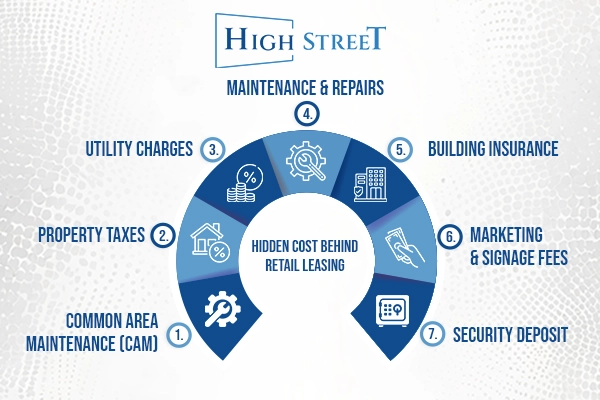
These are the fees that tenants have to pay for shared spaces of commercial properties. They cover the upkeep of areas like parking lots, elevators, security services, lighting, and cleaning facilities. These fees are generally divided based on the size of the shared lease.
In most lease agreements, tenants are required to contribute to the property taxes. In some lease agreements, mostly the triple net (NNN) leases, the owners are responsible for paying a portion of the property’s tax burden. The charges can fluctuate over time due to periodic value reassessments or local tax changes. In such cases, there is a possibility that the leasing costs might increase even if rent remains the same.
These are charges levied for using the basic services of the building. Depending on the deed, the retailers have to pay for electricity, water, heating, cooling, and internet services, which are billed separately. Most retail businesses had to rely on extensive lighting; hence, their utility fees can be a bit high. Before evaluating retail space for lease, request the utility charges history to get insights about the expenses.
In the lease agreements, it is mostly mentioned who is responsible for paying for maintenance and repairs. Retailers are generally required to pay certain aspects of the leased premises, including interior repairs, HVAC servicing, plumbing maintenance, electrical repairs and shopfront upkeep. Make sure to understand these costs and how you are required to pay every month; unexpected charges will strain your budget.
In commercial property leases, it is the building owners who carry the insurance amount. But sometimes, the retailers are also needed to contribute towards these costs. The charges vary depending on the location, property type, and nature of your business. Ask your owners about these obligations to manage your expenses accordingly.
Many retail complexes have rules and regulations about how tenants can advertise within the property. To promote the centre as a whole, landlords often require tenants to contribute to marketing and signage programs. Though these fees are required to maintain the visibility of the retail brand, they are an additional cost beyond rent.
It is a one-time amount that needs to be paid when finalising a retail space for lease. It acts as financial protection for the landlord in case of unpaid rent, property damage, or lease violations. The entire fee is refundable at the end of the lease term. The amount depends on one month to several months of rent, depending on the lease policies.
The true cost of retail leasing is more than the advertised rent. Hence, when searching for retail space for lease, ask for a complete cost breakdown and choose the one that supports your business goals and expenses.